•  
Sunflower Field Illustrations - Spain

Sunflower Field Illustrations - Spain

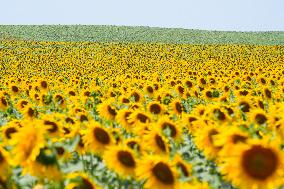
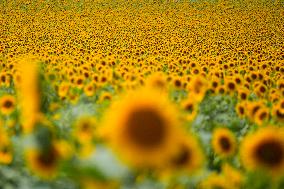
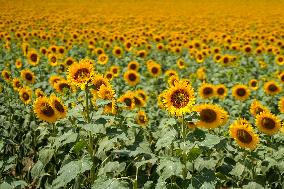
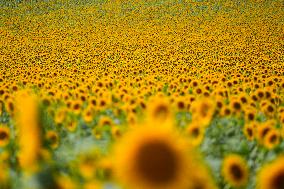
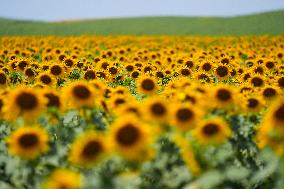
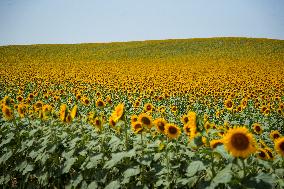
Images of a field of sunflowers in bloom in the Sevillian town of Sanlucar la Mayor, on June 20, 2025, in Seville, Andalusia, Spain. This Saturday, June 21, at 2 hours 42 minutes UTC, according to calculations by the National Astronomical Observatory, the summer solstice will occur, a phenomenon in which the Sun reaches its maximum declination projecting its light over the maximum geographic latitude on Earth. This astronomical event starts the summer in the northern hemisphere and the winter in the southern hemisphere. In addition, the day of the summer solstice corresponds to the longest day of the year, since it is the day on which the Sun rises the earliest and the day on which it sets the latest. Photo by Joaquin Corchero/Europa Press/ABACAPRESS.COM

  •  
Sunflower Field Illustrations - Spain

Sunflower Field Illustrations - Spain

Images of a field of sunflowers in bloom in the Sevillian town of Sanlucar la Mayor, on June 20, 2025, in Seville, Andalusia, Spain. This Saturday, June 21, at 2 hours 42 minutes UTC, according to calculations by the National Astronomical Observatory, the summer solstice will occur, a phenomenon in which the Sun reaches its maximum declination projecting its light over the maximum geographic latitude on Earth. This astronomical event starts the summer in the northern hemisphere and the winter in the southern hemisphere. In addition, the day of the summer solstice corresponds to the longest day of the year, since it is the day on which the Sun rises the earliest and the day on which it sets the latest. Photo by Joaquin Corchero/Europa Press/ABACAPRESS.COM

  •  
Sunflower Field Illustrations - Spain

Sunflower Field Illustrations - Spain

Images of a field of sunflowers in bloom in the Sevillian town of Sanlucar la Mayor, on June 20, 2025, in Seville, Andalusia, Spain. This Saturday, June 21, at 2 hours 42 minutes UTC, according to calculations by the National Astronomical Observatory, the summer solstice will occur, a phenomenon in which the Sun reaches its maximum declination projecting its light over the maximum geographic latitude on Earth. This astronomical event starts the summer in the northern hemisphere and the winter in the southern hemisphere. In addition, the day of the summer solstice corresponds to the longest day of the year, since it is the day on which the Sun rises the earliest and the day on which it sets the latest. Photo by Joaquin Corchero/Europa Press/ABACAPRESS.COM

  •  
Sunflower Field Illustrations - Spain

Sunflower Field Illustrations - Spain

Images of a field of sunflowers in bloom in the Sevillian town of Sanlucar la Mayor, on June 20, 2025, in Seville, Andalusia, Spain. This Saturday, June 21, at 2 hours 42 minutes UTC, according to calculations by the National Astronomical Observatory, the summer solstice will occur, a phenomenon in which the Sun reaches its maximum declination projecting its light over the maximum geographic latitude on Earth. This astronomical event starts the summer in the northern hemisphere and the winter in the southern hemisphere. In addition, the day of the summer solstice corresponds to the longest day of the year, since it is the day on which the Sun rises the earliest and the day on which it sets the latest. Photo by Joaquin Corchero/Europa Press/ABACAPRESS.COM

  •  
Sunflower Field Illustrations - Spain

Sunflower Field Illustrations - Spain

Images of a field of sunflowers in bloom in the Sevillian town of Sanlucar la Mayor, on June 20, 2025, in Seville, Andalusia, Spain. This Saturday, June 21, at 2 hours 42 minutes UTC, according to calculations by the National Astronomical Observatory, the summer solstice will occur, a phenomenon in which the Sun reaches its maximum declination projecting its light over the maximum geographic latitude on Earth. This astronomical event starts the summer in the northern hemisphere and the winter in the southern hemisphere. In addition, the day of the summer solstice corresponds to the longest day of the year, since it is the day on which the Sun rises the earliest and the day on which it sets the latest. Photo by Joaquin Corchero/Europa Press/ABACAPRESS.COM

  •  
Sunflower Field Illustrations - Spain

Sunflower Field Illustrations - Spain

Images of a field of sunflowers in bloom in the Sevillian town of Sanlucar la Mayor, on June 20, 2025, in Seville, Andalusia, Spain. This Saturday, June 21, at 2 hours 42 minutes UTC, according to calculations by the National Astronomical Observatory, the summer solstice will occur, a phenomenon in which the Sun reaches its maximum declination projecting its light over the maximum geographic latitude on Earth. This astronomical event starts the summer in the northern hemisphere and the winter in the southern hemisphere. In addition, the day of the summer solstice corresponds to the longest day of the year, since it is the day on which the Sun rises the earliest and the day on which it sets the latest. Photo by Joaquin Corchero/Europa Press/ABACAPRESS.COM

  •  
Sunflower Field Illustrations - Spain

Sunflower Field Illustrations - Spain

Images of a field of sunflowers in bloom in the Sevillian town of Sanlucar la Mayor, on June 20, 2025, in Seville, Andalusia, Spain. This Saturday, June 21, at 2 hours 42 minutes UTC, according to calculations by the National Astronomical Observatory, the summer solstice will occur, a phenomenon in which the Sun reaches its maximum declination projecting its light over the maximum geographic latitude on Earth. This astronomical event starts the summer in the northern hemisphere and the winter in the southern hemisphere. In addition, the day of the summer solstice corresponds to the longest day of the year, since it is the day on which the Sun rises the earliest and the day on which it sets the latest. Photo by Joaquin Corchero/Europa Press/ABACAPRESS.COM

  •  
Sunflower Field Illustrations - Spain

Sunflower Field Illustrations - Spain

Images of a field of sunflowers in bloom in the Sevillian town of Sanlucar la Mayor, on June 20, 2025, in Seville, Andalusia, Spain. This Saturday, June 21, at 2 hours 42 minutes UTC, according to calculations by the National Astronomical Observatory, the summer solstice will occur, a phenomenon in which the Sun reaches its maximum declination projecting its light over the maximum geographic latitude on Earth. This astronomical event starts the summer in the northern hemisphere and the winter in the southern hemisphere. In addition, the day of the summer solstice corresponds to the longest day of the year, since it is the day on which the Sun rises the earliest and the day on which it sets the latest. Photo by Joaquin Corchero/Europa Press/ABACAPRESS.COM

  •  
Sunflower Field Illustrations - Spain

Sunflower Field Illustrations - Spain

Images of a field of sunflowers in bloom in the Sevillian town of Sanlucar la Mayor, on June 20, 2025, in Seville, Andalusia, Spain. This Saturday, June 21, at 2 hours 42 minutes UTC, according to calculations by the National Astronomical Observatory, the summer solstice will occur, a phenomenon in which the Sun reaches its maximum declination projecting its light over the maximum geographic latitude on Earth. This astronomical event starts the summer in the northern hemisphere and the winter in the southern hemisphere. In addition, the day of the summer solstice corresponds to the longest day of the year, since it is the day on which the Sun rises the earliest and the day on which it sets the latest. Photo by Joaquin Corchero/Europa Press/ABACAPRESS.COM

  •  
Sunflower Field Illustrations - Spain

Sunflower Field Illustrations - Spain

Images of a field of sunflowers in bloom in the Sevillian town of Sanlucar la Mayor, on June 20, 2025, in Seville, Andalusia, Spain. This Saturday, June 21, at 2 hours 42 minutes UTC, according to calculations by the National Astronomical Observatory, the summer solstice will occur, a phenomenon in which the Sun reaches its maximum declination projecting its light over the maximum geographic latitude on Earth. This astronomical event starts the summer in the northern hemisphere and the winter in the southern hemisphere. In addition, the day of the summer solstice corresponds to the longest day of the year, since it is the day on which the Sun rises the earliest and the day on which it sets the latest. Photo by Joaquin Corchero/Europa Press/ABACAPRESS.COM

  •  
Sunflower Field Illustrations - Spain

Sunflower Field Illustrations - Spain

Images of a field of sunflowers in bloom in the Sevillian town of Sanlucar la Mayor, on June 20, 2025, in Seville, Andalusia, Spain. This Saturday, June 21, at 2 hours 42 minutes UTC, according to calculations by the National Astronomical Observatory, the summer solstice will occur, a phenomenon in which the Sun reaches its maximum declination projecting its light over the maximum geographic latitude on Earth. This astronomical event starts the summer in the northern hemisphere and the winter in the southern hemisphere. In addition, the day of the summer solstice corresponds to the longest day of the year, since it is the day on which the Sun rises the earliest and the day on which it sets the latest. Photo by Joaquin Corchero/Europa Press/ABACAPRESS.COM

  •  
Sunflower Field Illustrations - Spain

Sunflower Field Illustrations - Spain

Images of a field of sunflowers in bloom in the Sevillian town of Sanlucar la Mayor, on June 20, 2025, in Seville, Andalusia, Spain. This Saturday, June 21, at 2 hours 42 minutes UTC, according to calculations by the National Astronomical Observatory, the summer solstice will occur, a phenomenon in which the Sun reaches its maximum declination projecting its light over the maximum geographic latitude on Earth. This astronomical event starts the summer in the northern hemisphere and the winter in the southern hemisphere. In addition, the day of the summer solstice corresponds to the longest day of the year, since it is the day on which the Sun rises the earliest and the day on which it sets the latest. Photo by Joaquin Corchero/Europa Press/ABACAPRESS.COM

  •  
Sunflower Field Illustrations - Spain

Sunflower Field Illustrations - Spain

Images of a field of sunflowers in bloom in the Sevillian town of Sanlucar la Mayor, on June 20, 2025, in Seville, Andalusia, Spain. This Saturday, June 21, at 2 hours 42 minutes UTC, according to calculations by the National Astronomical Observatory, the summer solstice will occur, a phenomenon in which the Sun reaches its maximum declination projecting its light over the maximum geographic latitude on Earth. This astronomical event starts the summer in the northern hemisphere and the winter in the southern hemisphere. In addition, the day of the summer solstice corresponds to the longest day of the year, since it is the day on which the Sun rises the earliest and the day on which it sets the latest. Photo by Joaquin Corchero/Europa Press/ABACAPRESS.COM

  •  
Sunflower Field Illustrations - Spain

Sunflower Field Illustrations - Spain

Images of a field of sunflowers in bloom in the Sevillian town of Sanlucar la Mayor, on June 20, 2025, in Seville, Andalusia, Spain. This Saturday, June 21, at 2 hours 42 minutes UTC, according to calculations by the National Astronomical Observatory, the summer solstice will occur, a phenomenon in which the Sun reaches its maximum declination projecting its light over the maximum geographic latitude on Earth. This astronomical event starts the summer in the northern hemisphere and the winter in the southern hemisphere. In addition, the day of the summer solstice corresponds to the longest day of the year, since it is the day on which the Sun rises the earliest and the day on which it sets the latest. Photo by Joaquin Corchero/Europa Press/ABACAPRESS.COM

  •  
Sunflower Field Illustrations - Spain

Sunflower Field Illustrations - Spain

Images of a field of sunflowers in bloom in the Sevillian town of Sanlucar la Mayor, on June 20, 2025, in Seville, Andalusia, Spain. This Saturday, June 21, at 2 hours 42 minutes UTC, according to calculations by the National Astronomical Observatory, the summer solstice will occur, a phenomenon in which the Sun reaches its maximum declination projecting its light over the maximum geographic latitude on Earth. This astronomical event starts the summer in the northern hemisphere and the winter in the southern hemisphere. In addition, the day of the summer solstice corresponds to the longest day of the year, since it is the day on which the Sun rises the earliest and the day on which it sets the latest. Photo by Joaquin Corchero/Europa Press/ABACAPRESS.COM

  •  
Sunflower Field Illustrations - Spain

Sunflower Field Illustrations - Spain

Images of a field of sunflowers in bloom in the Sevillian town of Sanlucar la Mayor, on June 20, 2025, in Seville, Andalusia, Spain. This Saturday, June 21, at 2 hours 42 minutes UTC, according to calculations by the National Astronomical Observatory, the summer solstice will occur, a phenomenon in which the Sun reaches its maximum declination projecting its light over the maximum geographic latitude on Earth. This astronomical event starts the summer in the northern hemisphere and the winter in the southern hemisphere. In addition, the day of the summer solstice corresponds to the longest day of the year, since it is the day on which the Sun rises the earliest and the day on which it sets the latest. Photo by Joaquin Corchero/Europa Press/ABACAPRESS.COM

  •  
Sunflower Field Illustrations - Spain

Sunflower Field Illustrations - Spain

Images of a field of sunflowers in bloom in the Sevillian town of Sanlucar la Mayor, on June 20, 2025, in Seville, Andalusia, Spain. This Saturday, June 21, at 2 hours 42 minutes UTC, according to calculations by the National Astronomical Observatory, the summer solstice will occur, a phenomenon in which the Sun reaches its maximum declination projecting its light over the maximum geographic latitude on Earth. This astronomical event starts the summer in the northern hemisphere and the winter in the southern hemisphere. In addition, the day of the summer solstice corresponds to the longest day of the year, since it is the day on which the Sun rises the earliest and the day on which it sets the latest. Photo by Joaquin Corchero/Europa Press/ABACAPRESS.COM

  •  
Sunflower Field Illustrations - Spain

Sunflower Field Illustrations - Spain

Images of a field of sunflowers in bloom in the Sevillian town of Sanlucar la Mayor, on June 20, 2025, in Seville, Andalusia, Spain. This Saturday, June 21, at 2 hours 42 minutes UTC, according to calculations by the National Astronomical Observatory, the summer solstice will occur, a phenomenon in which the Sun reaches its maximum declination projecting its light over the maximum geographic latitude on Earth. This astronomical event starts the summer in the northern hemisphere and the winter in the southern hemisphere. In addition, the day of the summer solstice corresponds to the longest day of the year, since it is the day on which the Sun rises the earliest and the day on which it sets the latest. Photo by Joaquin Corchero/Europa Press/ABACAPRESS.COM

  •  
Sunflower Field Illustrations - Spain

Sunflower Field Illustrations - Spain

Images of a field of sunflowers in bloom in the Sevillian town of Sanlucar la Mayor, on June 20, 2025, in Seville, Andalusia, Spain. This Saturday, June 21, at 2 hours 42 minutes UTC, according to calculations by the National Astronomical Observatory, the summer solstice will occur, a phenomenon in which the Sun reaches its maximum declination projecting its light over the maximum geographic latitude on Earth. This astronomical event starts the summer in the northern hemisphere and the winter in the southern hemisphere. In addition, the day of the summer solstice corresponds to the longest day of the year, since it is the day on which the Sun rises the earliest and the day on which it sets the latest. Photo by Joaquin Corchero/Europa Press/ABACAPRESS.COM

  •  
Sunflower Field Illustrations - Spain

Sunflower Field Illustrations - Spain

Images of a field of sunflowers in bloom in the Sevillian town of Sanlucar la Mayor, on June 20, 2025, in Seville, Andalusia, Spain. This Saturday, June 21, at 2 hours 42 minutes UTC, according to calculations by the National Astronomical Observatory, the summer solstice will occur, a phenomenon in which the Sun reaches its maximum declination projecting its light over the maximum geographic latitude on Earth. This astronomical event starts the summer in the northern hemisphere and the winter in the southern hemisphere. In addition, the day of the summer solstice corresponds to the longest day of the year, since it is the day on which the Sun rises the earliest and the day on which it sets the latest. Photo by Joaquin Corchero/Europa Press/ABACAPRESS.COM

  •  
Sunflower Field Illustrations - Spain

Sunflower Field Illustrations - Spain

Images of a field of sunflowers in bloom in the Sevillian town of Sanlucar la Mayor, on June 20, 2025, in Seville, Andalusia, Spain. This Saturday, June 21, at 2 hours 42 minutes UTC, according to calculations by the National Astronomical Observatory, the summer solstice will occur, a phenomenon in which the Sun reaches its maximum declination projecting its light over the maximum geographic latitude on Earth. This astronomical event starts the summer in the northern hemisphere and the winter in the southern hemisphere. In addition, the day of the summer solstice corresponds to the longest day of the year, since it is the day on which the Sun rises the earliest and the day on which it sets the latest. Photo by Joaquin Corchero/Europa Press/ABACAPRESS.COM

  •  
Sunflower Field Illustrations - Spain

Sunflower Field Illustrations - Spain

Images of a field of sunflowers in bloom in the Sevillian town of Sanlucar la Mayor, on June 20, 2025, in Seville, Andalusia, Spain. This Saturday, June 21, at 2 hours 42 minutes UTC, according to calculations by the National Astronomical Observatory, the summer solstice will occur, a phenomenon in which the Sun reaches its maximum declination projecting its light over the maximum geographic latitude on Earth. This astronomical event starts the summer in the northern hemisphere and the winter in the southern hemisphere. In addition, the day of the summer solstice corresponds to the longest day of the year, since it is the day on which the Sun rises the earliest and the day on which it sets the latest. Photo by Joaquin Corchero/Europa Press/ABACAPRESS.COM

  •  
Sunflower Field Illustrations - Spain

Sunflower Field Illustrations - Spain

Images of a field of sunflowers in bloom in the Sevillian town of Sanlucar la Mayor, on June 20, 2025, in Seville, Andalusia, Spain. This Saturday, June 21, at 2 hours 42 minutes UTC, according to calculations by the National Astronomical Observatory, the summer solstice will occur, a phenomenon in which the Sun reaches its maximum declination projecting its light over the maximum geographic latitude on Earth. This astronomical event starts the summer in the northern hemisphere and the winter in the southern hemisphere. In addition, the day of the summer solstice corresponds to the longest day of the year, since it is the day on which the Sun rises the earliest and the day on which it sets the latest. Photo by Joaquin Corchero/Europa Press/ABACAPRESS.COM

  •  
Sunflower Field Illustrations - Spain

Sunflower Field Illustrations - Spain

Images of a field of sunflowers in bloom in the Sevillian town of Sanlucar la Mayor, on June 20, 2025, in Seville, Andalusia, Spain. This Saturday, June 21, at 2 hours 42 minutes UTC, according to calculations by the National Astronomical Observatory, the summer solstice will occur, a phenomenon in which the Sun reaches its maximum declination projecting its light over the maximum geographic latitude on Earth. This astronomical event starts the summer in the northern hemisphere and the winter in the southern hemisphere. In addition, the day of the summer solstice corresponds to the longest day of the year, since it is the day on which the Sun rises the earliest and the day on which it sets the latest. Photo by Joaquin Corchero/Europa Press/ABACAPRESS.COM

  •  
Sunflower Field Illustrations - Spain

Sunflower Field Illustrations - Spain

Images of a field of sunflowers in bloom in the Sevillian town of Sanlucar la Mayor, on June 20, 2025, in Seville, Andalusia, Spain. This Saturday, June 21, at 2 hours 42 minutes UTC, according to calculations by the National Astronomical Observatory, the summer solstice will occur, a phenomenon in which the Sun reaches its maximum declination projecting its light over the maximum geographic latitude on Earth. This astronomical event starts the summer in the northern hemisphere and the winter in the southern hemisphere. In addition, the day of the summer solstice corresponds to the longest day of the year, since it is the day on which the Sun rises the earliest and the day on which it sets the latest. Photo by Joaquin Corchero/Europa Press/ABACAPRESS.COM

  •  
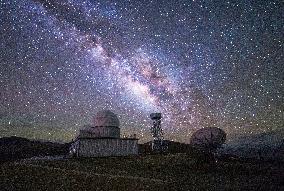
Starry Sky In Ngari Prefecture - China

Starry Sky In Ngari Prefecture - China

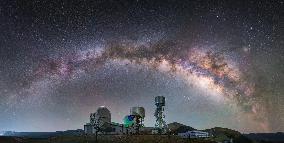
This undated photo provided by the Ngari Observatory of the National Astronomical Observatories of the Chinese Academy of Sciences (NAOC) shows the sky in Ngari Prefecture, southwest China's Xizang Autonomous Region. Photo by Xinhua/ABACAPRESS.COM

  •  
CHINA-TIBET-NGARI OBSERVATORY-LONGEST-SERVING STAFF (CN)

CHINA-TIBET-NGARI OBSERVATORY-LONGEST-SERVING STAFF (CN)

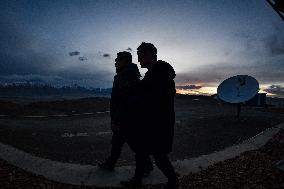
(230528) -- NGARI, May 28, 2023 (Xinhua) -- You Xianlong (R) and his colleague Tang Peng walk to a telescope awaiting maintenance at the Ngari Observatory in Ngari Prefecture, southwest China's Tibet Autonomous Region, May 23, 2023. You Xianlong, a 36-year-old resident engineer at the Ngari Observatory in Tibet Autonomous Region, is responsible for equipment observation and operation maintenance along with seven colleagues. He is also the longest-serving engineer at the observatory. You's career began in 2006 when he met Yao Yongqiang, a scientist at the National Astronomical Observatories under the Chinese Academy of Sciences (CAS), who was looking for workers to conduct long-term measurements in challenging plateau environments. Since then, You has been working at the Ngari Observatory for 17 years. Selecting an observatory site is a complex process that involves examining terrain, geology, and support conditions. It also requires years of measurement and evaluation of factors such as the number of cl

  •  
CHINA-TIBET-NGARI OBSERVATORY-LONGEST-SERVING STAFF (CN)

CHINA-TIBET-NGARI OBSERVATORY-LONGEST-SERVING STAFF (CN)

(230528) -- NGARI, May 28, 2023 (Xinhua) -- This photo taken on May 24, 2023 shows the Ngari Observatory at night in Ngari Prefecture, southwest China's Tibet Autonomous Region. You Xianlong, a 36-year-old resident engineer at the Ngari Observatory in Tibet Autonomous Region, is responsible for equipment observation and operation maintenance along with seven colleagues. He is also the longest-serving engineer at the observatory. You's career began in 2006 when he met Yao Yongqiang, a scientist at the National Astronomical Observatories under the Chinese Academy of Sciences (CAS), who was looking for workers to conduct long-term measurements in challenging plateau environments. Since then, You has been working at the Ngari Observatory for 17 years. Selecting an observatory site is a complex process that involves examining terrain, geology, and support conditions. It also requires years of measurement and evaluation of factors such as the number of clear nights, astronomical seeing conditions, precipitabl

  •  
CHINA-TIBET-NGARI OBSERVATORY-LONGEST-SERVING STAFF (CN)

CHINA-TIBET-NGARI OBSERVATORY-LONGEST-SERVING STAFF (CN)

(230528) -- NGARI, May 28, 2023 (Xinhua) -- You Xianlong gazes into the night sky at the Ngari Observatory in Ngari Prefecture, southwest China's Tibet Autonomous Region, May 23, 2023. You Xianlong, a 36-year-old resident engineer at the Ngari Observatory in Tibet Autonomous Region, is responsible for equipment observation and operation maintenance along with seven colleagues. He is also the longest-serving engineer at the observatory. You's career began in 2006 when he met Yao Yongqiang, a scientist at the National Astronomical Observatories under the Chinese Academy of Sciences (CAS), who was looking for workers to conduct long-term measurements in challenging plateau environments. Since then, You has been working at the Ngari Observatory for 17 years. Selecting an observatory site is a complex process that involves examining terrain, geology, and support conditions. It also requires years of measurement and evaluation of factors such as the number of clear nights, astronomical seeing conditions, prec

  •  
CHINA-TIBET-NGARI OBSERVATORY-LONGEST-SERVING STAFF (CN)

CHINA-TIBET-NGARI OBSERVATORY-LONGEST-SERVING STAFF (CN)

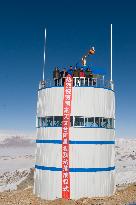
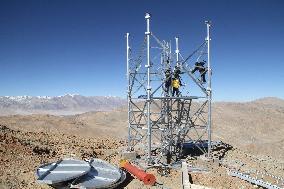
(230528) -- NGARI, May 28, 2023 (Xinhua) -- This file photo taken in 2011 shows the first observation tower of the Ngari Observatory in Ngari Prefecture, southwest China's Tibet Autonomous Region. You Xianlong, a 36-year-old resident engineer at the Ngari Observatory in Tibet Autonomous Region, is responsible for equipment observation and operation maintenance along with seven colleagues. He is also the longest-serving engineer at the observatory. You's career began in 2006 when he met Yao Yongqiang, a scientist at the National Astronomical Observatories under the Chinese Academy of Sciences (CAS), who was looking for workers to conduct long-term measurements in challenging plateau environments. Since then, You has been working at the Ngari Observatory for 17 years. Selecting an observatory site is a complex process that involves examining terrain, geology, and support conditions. It also requires years of measurement and evaluation of factors such as the number of clear nights, astronomical seeing cond

  •  
CHINA-TIBET-NGARI OBSERVATORY-LONGEST-SERVING STAFF (CN)

CHINA-TIBET-NGARI OBSERVATORY-LONGEST-SERVING STAFF (CN)

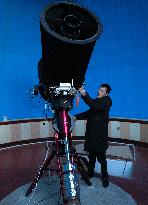
(230528) -- NGARI, May 28, 2023 (Xinhua) -- You Xianlong tests a telescope at the Ngari Observatory in Ngari Prefecture, southwest China's Tibet Autonomous Region, May 24, 2023. You Xianlong, a 36-year-old resident engineer at the Ngari Observatory in Tibet Autonomous Region, is responsible for equipment observation and operation maintenance along with seven colleagues. He is also the longest-serving engineer at the observatory. You's career began in 2006 when he met Yao Yongqiang, a scientist at the National Astronomical Observatories under the Chinese Academy of Sciences (CAS), who was looking for workers to conduct long-term measurements in challenging plateau environments. Since then, You has been working at the Ngari Observatory for 17 years. Selecting an observatory site is a complex process that involves examining terrain, geology, and support conditions. It also requires years of measurement and evaluation of factors such as the number of clear nights, astronomical seeing conditions, precipitabl

  •  
CHINA-TIBET-NGARI OBSERVATORY-LONGEST-SERVING STAFF (CN)

CHINA-TIBET-NGARI OBSERVATORY-LONGEST-SERVING STAFF (CN)

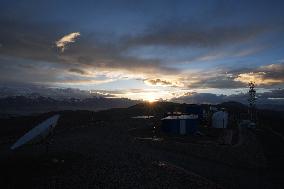
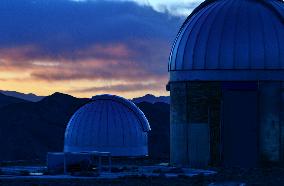
(230528) -- NGARI, May 28, 2023 (Xinhua) -- This photo taken on May 24, 2023 shows the Ngari Observatory at sunset in Ngari Prefecture, southwest China's Tibet Autonomous Region. You Xianlong, a 36-year-old resident engineer at the Ngari Observatory in Tibet Autonomous Region, is responsible for equipment observation and operation maintenance along with seven colleagues. He is also the longest-serving engineer at the observatory. You's career began in 2006 when he met Yao Yongqiang, a scientist at the National Astronomical Observatories under the Chinese Academy of Sciences (CAS), who was looking for workers to conduct long-term measurements in challenging plateau environments. Since then, You has been working at the Ngari Observatory for 17 years. Selecting an observatory site is a complex process that involves examining terrain, geology, and support conditions. It also requires years of measurement and evaluation of factors such as the number of clear nights, astronomical seeing conditions, precipitab

  •  
CHINA-TIBET-NGARI OBSERVATORY-LONGEST-SERVING STAFF (CN)

CHINA-TIBET-NGARI OBSERVATORY-LONGEST-SERVING STAFF (CN)

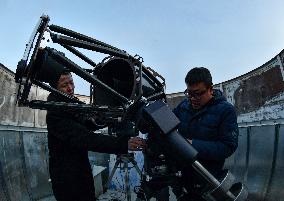
(230528) -- NGARI, May 28, 2023 (Xinhua) -- You Xianlong (L) and his colleague Tang Peng test a telescope at the Ngari Observatory in Ngari Prefecture, southwest China's Tibet Autonomous Region, May 23, 2023. You Xianlong, a 36-year-old resident engineer at the Ngari Observatory in Tibet Autonomous Region, is responsible for equipment observation and operation maintenance along with seven colleagues. He is also the longest-serving engineer at the observatory. You's career began in 2006 when he met Yao Yongqiang, a scientist at the National Astronomical Observatories under the Chinese Academy of Sciences (CAS), who was looking for workers to conduct long-term measurements in challenging plateau environments. Since then, You has been working at the Ngari Observatory for 17 years. Selecting an observatory site is a complex process that involves examining terrain, geology, and support conditions. It also requires years of measurement and evaluation of factors such as the number of clear nights, astronomical

  •  
CHINA-TIBET-NGARI OBSERVATORY-LONGEST-SERVING STAFF (CN)

CHINA-TIBET-NGARI OBSERVATORY-LONGEST-SERVING STAFF (CN)

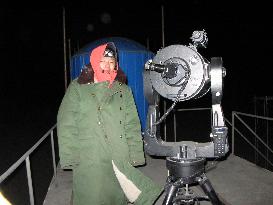
(230528) -- NGARI, May 28, 2023 (Xinhua) -- This file photo taken in December 2010 shows You Xianlong working at the Oma Observatory in Ngari Prefecture, southwest China's Tibet Autonomous Region. You Xianlong, a 36-year-old resident engineer at the Ngari Observatory in Tibet Autonomous Region, is responsible for equipment observation and operation maintenance along with seven colleagues. He is also the longest-serving engineer at the observatory. You's career began in 2006 when he met Yao Yongqiang, a scientist at the National Astronomical Observatories under the Chinese Academy of Sciences (CAS), who was looking for workers to conduct long-term measurements in challenging plateau environments. Since then, You has been working at the Ngari Observatory for 17 years. Selecting an observatory site is a complex process that involves examining terrain, geology, and support conditions. It also requires years of measurement and evaluation of factors such as the number of clear nights, astronomical seeing cond

  •  
CHINA-TIBET-NGARI OBSERVATORY-LONGEST-SERVING STAFF (CN)

CHINA-TIBET-NGARI OBSERVATORY-LONGEST-SERVING STAFF (CN)

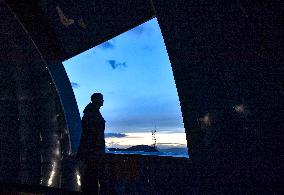
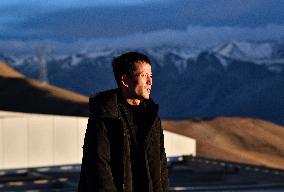
(230528) -- NGARI, May 28, 2023 (Xinhua) -- You Xianlong looks into the distance at the Ngari Observatory in Ngari Prefecture, southwest China's Tibet Autonomous Region, May 24, 2023. You Xianlong, a 36-year-old resident engineer at the Ngari Observatory in Tibet Autonomous Region, is responsible for equipment observation and operation maintenance along with seven colleagues. He is also the longest-serving engineer at the observatory. You's career began in 2006 when he met Yao Yongqiang, a scientist at the National Astronomical Observatories under the Chinese Academy of Sciences (CAS), who was looking for workers to conduct long-term measurements in challenging plateau environments. Since then, You has been working at the Ngari Observatory for 17 years. Selecting an observatory site is a complex process that involves examining terrain, geology, and support conditions. It also requires years of measurement and evaluation of factors such as the number of clear nights, astronomical seeing conditions, preci

  •  
CHINA-TIBET-NGARI OBSERVATORY-LONGEST-SERVING STAFF (CN)

CHINA-TIBET-NGARI OBSERVATORY-LONGEST-SERVING STAFF (CN)

(230528) -- NGARI, May 28, 2023 (Xinhua) -- You Xianlong (L) and his colleague Tang Peng discuss data collected at the Ngari Observatory in Ngari Prefecture, southwest China's Tibet Autonomous Region, May 23, 2023. You Xianlong, a 36-year-old resident engineer at the Ngari Observatory in Tibet Autonomous Region, is responsible for equipment observation and operation maintenance along with seven colleagues. He is also the longest-serving engineer at the observatory. You's career began in 2006 when he met Yao Yongqiang, a scientist at the National Astronomical Observatories under the Chinese Academy of Sciences (CAS), who was looking for workers to conduct long-term measurements in challenging plateau environments. Since then, You has been working at the Ngari Observatory for 17 years. Selecting an observatory site is a complex process that involves examining terrain, geology, and support conditions. It also requires years of measurement and evaluation of factors such as the number of clear nights, astron

  •  
CHINA-TIBET-NGARI OBSERVATORY-LONGEST-SERVING STAFF (CN)

CHINA-TIBET-NGARI OBSERVATORY-LONGEST-SERVING STAFF (CN)

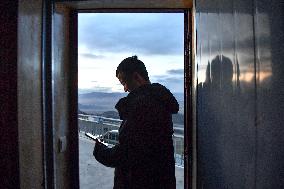
(230528) -- NGARI, May 28, 2023 (Xinhua) -- You Xianlong talks with his family over the mobile phone at the Ngari Observatory in Ngari Prefecture, southwest China's Tibet Autonomous Region, May 24, 2023. You Xianlong, a 36-year-old resident engineer at the Ngari Observatory in Tibet Autonomous Region, is responsible for equipment observation and operation maintenance along with seven colleagues. He is also the longest-serving engineer at the observatory. You's career began in 2006 when he met Yao Yongqiang, a scientist at the National Astronomical Observatories under the Chinese Academy of Sciences (CAS), who was looking for workers to conduct long-term measurements in challenging plateau environments. Since then, You has been working at the Ngari Observatory for 17 years. Selecting an observatory site is a complex process that involves examining terrain, geology, and support conditions. It also requires years of measurement and evaluation of factors such as the number of clear nights, astronomical seei

  •  
CHINA-TIBET-NGARI OBSERVATORY-LONGEST-SERVING STAFF (CN)

CHINA-TIBET-NGARI OBSERVATORY-LONGEST-SERVING STAFF (CN)

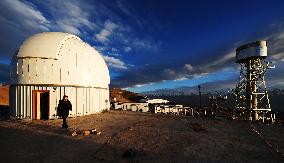
(230528) -- NGARI, May 28, 2023 (Xinhua) -- You Xianlong walks out a telescope dome at the Ngari Observatory in Ngari Prefecture, southwest China's Tibet Autonomous Region, May 24, 2023. You Xianlong, a 36-year-old resident engineer at the Ngari Observatory in Tibet Autonomous Region, is responsible for equipment observation and operation maintenance along with seven colleagues. He is also the longest-serving engineer at the observatory. You's career began in 2006 when he met Yao Yongqiang, a scientist at the National Astronomical Observatories under the Chinese Academy of Sciences (CAS), who was looking for workers to conduct long-term measurements in challenging plateau environments. Since then, You has been working at the Ngari Observatory for 17 years. Selecting an observatory site is a complex process that involves examining terrain, geology, and support conditions. It also requires years of measurement and evaluation of factors such as the number of clear nights, astronomical seeing conditions, pr

  •  
CHINA-TIBET-NGARI OBSERVATORY-LONGEST-SERVING STAFF (CN)

CHINA-TIBET-NGARI OBSERVATORY-LONGEST-SERVING STAFF (CN)

(230528) -- NGARI, May 28, 2023 (Xinhua) -- You Xianlong heads for his office at the Ngari Observatory in Ngari Prefecture, southwest China's Tibet Autonomous Region, May 24, 2023. You Xianlong, a 36-year-old resident engineer at the Ngari Observatory in Tibet Autonomous Region, is responsible for equipment observation and operation maintenance along with seven colleagues. He is also the longest-serving engineer at the observatory. You's career began in 2006 when he met Yao Yongqiang, a scientist at the National Astronomical Observatories under the Chinese Academy of Sciences (CAS), who was looking for workers to conduct long-term measurements in challenging plateau environments. Since then, You has been working at the Ngari Observatory for 17 years. Selecting an observatory site is a complex process that involves examining terrain, geology, and support conditions. It also requires years of measurement and evaluation of factors such as the number of clear nights, astronomical seeing conditions, precipit

  •  
CHINA-TIBET-NGARI OBSERVATORY-LONGEST-SERVING STAFF (CN)

CHINA-TIBET-NGARI OBSERVATORY-LONGEST-SERVING STAFF (CN)

(230528) -- NGARI, May 28, 2023 (Xinhua) -- This file photo taken in August 2013 shows a construction site of the Ngari Observatory of the National Astronomical Observatories (NAO) in Ngari Prefecture, southwest China's Tibet Autonomous Region. You Xianlong, a 36-year-old resident engineer at the Ngari Observatory in Tibet Autonomous Region, is responsible for equipment observation and operation maintenance along with seven colleagues. He is also the longest-serving engineer at the observatory. You's career began in 2006 when he met Yao Yongqiang, a scientist at the National Astronomical Observatories under the Chinese Academy of Sciences (CAS), who was looking for workers to conduct long-term measurements in challenging plateau environments. Since then, You has been working at the Ngari Observatory for 17 years. Selecting an observatory site is a complex process that involves examining terrain, geology, and support conditions. It also requires years of measurement and evaluation of factors such as the

  •  
CHINA-TIBET-NGARI OBSERVATORY-LONGEST-SERVING STAFF (CN)

CHINA-TIBET-NGARI OBSERVATORY-LONGEST-SERVING STAFF (CN)

(230528) -- NGARI, May 28, 2023 (Xinhua) -- You Xianlong (L) and his colleague Tang Peng test a telescope at the Ngari Observatory in Ngari Prefecture, southwest China's Tibet Autonomous Region, May 23, 2023. You Xianlong, a 36-year-old resident engineer at the Ngari Observatory in Tibet Autonomous Region, is responsible for equipment observation and operation maintenance along with seven colleagues. He is also the longest-serving engineer at the observatory. You's career began in 2006 when he met Yao Yongqiang, a scientist at the National Astronomical Observatories under the Chinese Academy of Sciences (CAS), who was looking for workers to conduct long-term measurements in challenging plateau environments. Since then, You has been working at the Ngari Observatory for 17 years. Selecting an observatory site is a complex process that involves examining terrain, geology, and support conditions. It also requires years of measurement and evaluation of factors such as the number of clear nights, astronomical

  •  
CHINA-TIBET-NGARI OBSERVATORY-LONGEST-SERVING STAFF (CN)

CHINA-TIBET-NGARI OBSERVATORY-LONGEST-SERVING STAFF (CN)

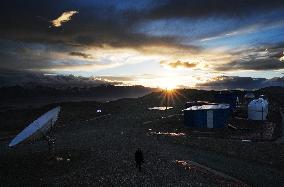
(230528) -- NGARI, May 28, 2023 (Xinhua) -- This photo taken on May 22, 2023 shows the Ngari Observatory at sunset in Ngari Prefecture, southwest China's Tibet Autonomous Region. You Xianlong, a 36-year-old resident engineer at the Ngari Observatory in Tibet Autonomous Region, is responsible for equipment observation and operation maintenance along with seven colleagues. He is also the longest-serving engineer at the observatory. You's career began in 2006 when he met Yao Yongqiang, a scientist at the National Astronomical Observatories under the Chinese Academy of Sciences (CAS), who was looking for workers to conduct long-term measurements in challenging plateau environments. Since then, You has been working at the Ngari Observatory for 17 years. Selecting an observatory site is a complex process that involves examining terrain, geology, and support conditions. It also requires years of measurement and evaluation of factors such as the number of clear nights, astronomical seeing conditions, precipitab

  •  
CHINA-TIBET-NGARI OBSERVATORY-LONGEST-SERVING STAFF (CN)

CHINA-TIBET-NGARI OBSERVATORY-LONGEST-SERVING STAFF (CN)

(230528) -- NGARI, May 28, 2023 (Xinhua) -- This file photo taken on April 23, 2017 shows the Ngari Observatory of the National Astronomical Observatories (NAO) in Ngari Prefecture, southwest China's Tibet Autonomous Region. You Xianlong, a 36-year-old resident engineer at the Ngari Observatory in Tibet Autonomous Region, is responsible for equipment observation and operation maintenance along with seven colleagues. He is also the longest-serving engineer at the observatory. You's career began in 2006 when he met Yao Yongqiang, a scientist at the National Astronomical Observatories under the Chinese Academy of Sciences (CAS), who was looking for workers to conduct long-term measurements in challenging plateau environments. Since then, You has been working at the Ngari Observatory for 17 years. Selecting an observatory site is a complex process that involves examining terrain, geology, and support conditions. It also requires years of measurement and evaluation of factors such as the number of clear nigh

  •  
CHINA-TIBET-NGARI OBSERVATORY-LONGEST-SERVING STAFF (CN)

CHINA-TIBET-NGARI OBSERVATORY-LONGEST-SERVING STAFF (CN)

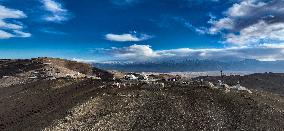
(230528) -- NGARI, May 28, 2023 (Xinhua) -- This photo taken on May 22, 2023 shows the Ngari Observatory in Ngari Prefecture, southwest China's Tibet Autonomous Region. You Xianlong, a 36-year-old resident engineer at the Ngari Observatory in Tibet Autonomous Region, is responsible for equipment observation and operation maintenance along with seven colleagues. He is also the longest-serving engineer at the observatory. You's career began in 2006 when he met Yao Yongqiang, a scientist at the National Astronomical Observatories under the Chinese Academy of Sciences (CAS), who was looking for workers to conduct long-term measurements in challenging plateau environments. Since then, You has been working at the Ngari Observatory for 17 years. Selecting an observatory site is a complex process that involves examining terrain, geology, and support conditions. It also requires years of measurement and evaluation of factors such as the number of clear nights, astronomical seeing conditions, precipitable water v

  •  
CHINA-TIBET-NGARI OBSERVATORY-LONGEST-SERVING STAFF (CN)

CHINA-TIBET-NGARI OBSERVATORY-LONGEST-SERVING STAFF (CN)

(230528) -- NGARI, May 28, 2023 (Xinhua) -- You Xianlong switches open a telescope dome at the Ngari Observatory in Ngari Prefecture, southwest China's Tibet Autonomous Region, May 24, 2023. You Xianlong, a 36-year-old resident engineer at the Ngari Observatory in Tibet Autonomous Region, is responsible for equipment observation and operation maintenance along with seven colleagues. He is also the longest-serving engineer at the observatory. You's career began in 2006 when he met Yao Yongqiang, a scientist at the National Astronomical Observatories under the Chinese Academy of Sciences (CAS), who was looking for workers to conduct long-term measurements in challenging plateau environments. Since then, You has been working at the Ngari Observatory for 17 years. Selecting an observatory site is a complex process that involves examining terrain, geology, and support conditions. It also requires years of measurement and evaluation of factors such as the number of clear nights, astronomical seeing conditions

  •  
CHINA-TIBET-NGARI OBSERVATORY-LONGEST-SERVING STAFF (CN)

CHINA-TIBET-NGARI OBSERVATORY-LONGEST-SERVING STAFF (CN)

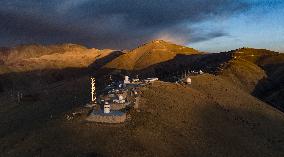
(230528) -- NGARI, May 28, 2023 (Xinhua) -- This photo taken on May 22, 2023 shows the Ngari Observatory at sunset in Ngari Prefecture, southwest China's Tibet Autonomous Region. You Xianlong, a 36-year-old resident engineer at the Ngari Observatory in Tibet Autonomous Region, is responsible for equipment observation and operation maintenance along with seven colleagues. He is also the longest-serving engineer at the observatory. You's career began in 2006 when he met Yao Yongqiang, a scientist at the National Astronomical Observatories under the Chinese Academy of Sciences (CAS), who was looking for workers to conduct long-term measurements in challenging plateau environments. Since then, You has been working at the Ngari Observatory for 17 years. Selecting an observatory site is a complex process that involves examining terrain, geology, and support conditions. It also requires years of measurement and evaluation of factors such as the number of clear nights, astronomical seeing conditions, precipitab

  •  

China develops cutting-edge observatory on "roof of the world"

STORY: China develops cutting-edge observatory on "roof of the world" DATELINE: May 10, 2023 LENGTH: 00:01:42 LOCATION: XINING, China CATEGORY: SCIENCE SHOTLIST: 1. various of the Lenghu site 2. SOUNDBITE 1 (Chinese): DENG LICAI, Researcher, National Astronomical Observatories under the Chinese Academy of Sciences 3. various of AIMS 4. SOUNDBITE 2 (Chinese): WANG DONGGUANG, Chief engineer, CAS's Huairou Solar Observing Station of National Astronomical Observatories STORYLINE: Lenghu, on the north side of China's Qinghai-Tibet Plateau, enjoys the advantages of clear night skies, stable atmospheric conditions, and a dry climate, making it one of the world's best astronomical observatory sites. Construction of the Lenghu site started in 2018. Upon its completion, it will house at least nine optical astronomical telescope projects including some 30 telescopes, with an investment of nearly 2 billion yuan (about 289 million U.S. dollars). SOUNDBITE 1 (Chinese): DENG LICAI, Researcher, National Astronomical Ob

  •  
Xinhua Headlines: China develops cutting-edge observatory on "roof of the world"

Xinhua Headlines: China develops cutting-edge observatory on "roof of the world"

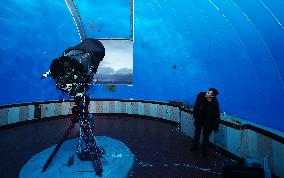
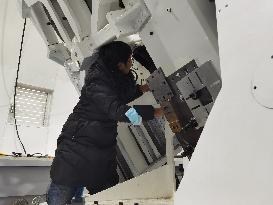
(230510) -- XINING, May 10, 2023 (Xinhua) -- This photo taken on April 8, 2023 with a mobile phone shows Wang Dongguang, chief engineer of CAS's Huairou Solar Observing Station of National Astronomical Observatories, working inside a dome of the Lenghu observatory site in northwest China's Qinghai Province. (Xinhua/Gu Ling)

  •  
Japan astronomer speaks from Hawaii to Japan audience

Japan astronomer speaks from Hawaii to Japan audience

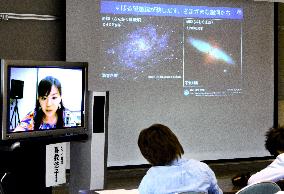
TOTTORI, Japan - Japanese astronomer Yuko Kakazu speaks from a branch in Hawaii of the National Astronomical Observatory of Japan via the Internet to an audience at Saji Astro Park in the western Japan city of Tottori during a ceremony to commemorate the 20th anniversary of the municipal astronomical station on July 26, 2014.

  •  
Subaru Telescope camera upgraded

Subaru Telescope camera upgraded

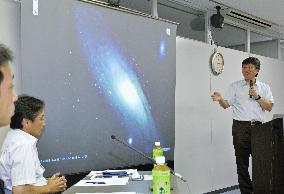
TOKYO, Japan - National Astronomical Observatory of Japan associate professor Satoshi Miyazaki speaks about the upgraded camera system of the observatory's Subaru Telescope in Hawaii, during a press conference in Tokyo on July 31, 2013. The telescope's new Hyper Suprime-Cam provides a wider field of view and sharper imaging.

  • Main
  • Top
  • Editorial
  • Creative
  • About Us
  • About ILG
  • Terms of use
  • Company
  • BEHIND
  • Price List
  • Single Plan
  • Monthly Plan
  • Services
  • Shooting
  • Rights Clearance
  • Support
  • FAQ
  • How To Buy
  • Contact Us
  • Become a Partner

© KYODO NEWS IMAGES INC

All Rights Reserved.

  • Editorial
  • Olympics
  • News
  • Sports
  • Japan
  • Tech
  • Royal
  • Disaster
  • NorthKorea
  • Old Japan
  • SNS

  • Creative
  • Food
  • Japan
  • Landscape
  • Animal
  • Popular
  • #Ukraine
  • #Russia
  • #coronavirus
  • #N. Korea
  • #Thailand
  • #China
  • #Ukraine
  • #Russia
  • #coronavirus
  • #N. Korea
  • #Thailand
  • #China
  • Food
  • Japan
  • Landscape
  • Animal
  • Olympics
  • News
  • Sports
  • Japan
  • Tech
  • Royal
  • Disaster
  • NorthKorea
  • Old Japan
  • SNS